
Food & Beverage
0
Bars & Nightlife
0
Activities by the Sea
0
Museums & Sightseeing
0
Outdoor Activities
0
Accommodation
0
Shopping
0
Arts & Culture
0
Entertainment
0
Health & Wellness
0Acropolis
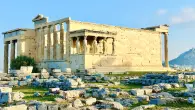
The Jewel of Athens! Historic hill overlooking Athens with landmark monuments and breathtaking city views.





Expert Tips
Go early in the morning or late afternoon to experience the best light, cooler temperatures in the summer and fewer crowds.
Enhanced with the AR-powered Chronos app, you can also visualize how the ancient site appeared 2,500 years ago, making the visit feel truly immersive and timeless.
Overview
Acropolis is renowned as the most important ancient site in Western civilization. Constructed during the 5th century BCE, its most famous structure is the Parthenon, dedicated to the goddess Athena. The Acropolis served as the religious and cultural center of Athens, showcasing magnificent architectural achievements of the ancient Greeks. Over the centuries, it has endured various transformations, including use as a Christian church and a mosque. Today, it stands as a symbol of classical Greece
The Acropolis of Athens, meaning “high city,” crowns the heart of Athens as a limestone plateau rising about 156 meters above sea level. It is home to some of the most celebrated monuments of ancient Greece, including the Parthenon, the Propylaea, the Erechtheion and the Temple of Athena Nike. It stands as a symbol of classical civilization and the birthplace of democracy.
While traces of habitation go back to the 4th millennium BC, the Acropolis reached its golden form during Pericles’ building campaign in the 5th century BC. Today it's recognized as a UNESCO World Heritage site for its historical and cultural significance.
Acropolis Hill rises above central Athens and is home to one of the most important ancient sites in the world. Located in the neighbourhood of Makrygianni and accessed from the pedestrian zone of Dionysiou Areopagitou, it offers a complete experience that blends archaeology, mythology and panoramic city views. The hill has been continuously inhabited since the Neolithic period and evolved into the religious and cultural heart of ancient Athens.
At the top you will find the Parthenon, Erechtheion, Temple of Athena Nike and the monumental Propylaea, all representing the height of classical architecture. Visitors also enjoy restored pathways, well preserved fortification walls and interpretive signs that explain the history of the site with clarity. The ascent is steady and paved, suitable for most visitors, with several viewpoints that allow time for rest and photography.
The atmosphere on Acropolis Hill changes throughout the day. Morning visits are calm with softer light, while sunset reveals a warm glow over the temples and the city. The elevated location offers exceptional views of Lycabettus Hill, the Ancient Agora, Plaka and the Saronic Gulf. For locals and travellers alike it is a site that defines the identity of Athens and provides meaningful insight into the origins of Western cultural heritage.
Practical access is simple. The main entrances are located at the Dionysiou Areopagitou side and at the northwest side near the Ancient Agora. Tickets can be purchased online to avoid queues, and combined passes are available for entry to nearby archaeological sites. The visit typically lasts one to two hours depending on pace and interest. Good footwear, water and sun protection are recommended, especially in warmer months.
Acropolis Hill is equally valuable for first time visitors and residents who wish to explore the city from a new perspective. Seasonal exhibitions, ongoing restoration work and guided tour options make repeated visits worthwhile. Due to its location next to the Acropolis Museum and Plaka, the area becomes a natural starting point for a broader cultural walk.